
What should a post-project debrief actually measure?
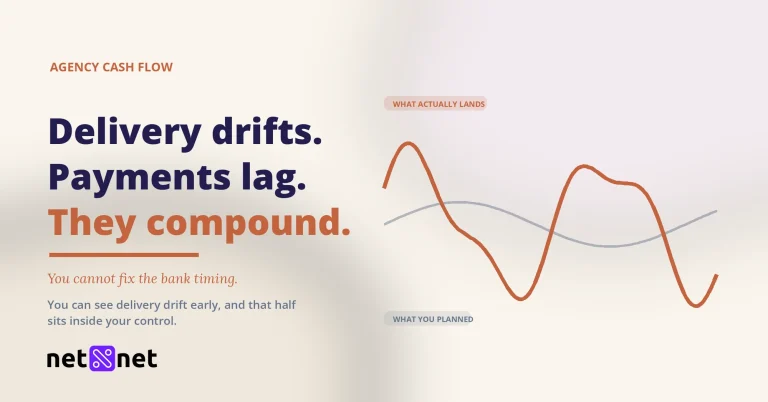
A useful debrief compares what you planned against what happened: estimated versus actual effort by deliverable, where the timeline slipped, and which scope changes were captured. Skip the vague what-went-well and look hard at the gaps, because that is where the next estimate and the next plan get better.
Finishing a project feels good, especially after a hard delivery stretch. That is also exactly when many firms waste the debrief.
They talk in generalities, swap a few opinions, maybe note that the client seemed happy, then move on. A post-project debrief works a lot better when it measures the parts of the Job that can actually improve the next one.
That means comparing the plan to reality, not just talking about how the work felt.
Start with effort by deliverable
The first thing to review is planned versus actual effort by deliverable.
This is the clearest operating signal because it shows where the plan held and where it did not. If one deliverable took much more effort than expected, that is worth understanding. Was the estimate thin? Did the scope drift? Did the handoff create extra cleanup? Did the client change direction halfway through?
Without that comparison, the team is left with impressions. With it, you have something usable for the next plan.
Review the quality of the output through the plan, not just taste
Creative output deserves its own line in the debrief, but it helps to frame it practically instead of just trading opinions.
Ask whether the work met the intended standard and whether the path to get there was clean. Did the team have enough clarity early? Were revisions expected or did they spiral? Did quality problems come from craft, from unclear inputs, or from drift in the Job itself?
A debrief should not turn into taste criticism for its own sake. The point is to understand what helped the output and what made it harder to reach.
Look hard at the timeline, especially near the end
Deployment and final delivery tend to be where timeline stress concentrates. More broadly, this is the timeline section of the debrief.
Where did the schedule slip? Was the project late because the work was heavier than planned, because approvals dragged, because dependencies got stuck, or because the final stretch had no slack in it? Those are different problems, and they need different fixes.
This is where post-project review becomes useful. Timeline misses are easy to remember emotionally, but it is much more helpful to identify the exact stage where the drift started.
Check whether scope changes were actually captured
One of the most useful debrief questions is whether the Job stayed the same Job all the way through.
If the work changed, was that change recorded and handled clearly, or did the team quietly absorb it? If a project finishes with mismatched memory about what was added, removed, or reworked, that affects the next estimate just as much as any effort overrun.
Captured scope changes create a better record. Uncaptured ones create false confidence.
Use the debrief to improve workflow, not to blame people
Workflow management is the thing that ties the rest of the debrief together, so keep it front and center.
The best debrief is not a hunt for who messed up. It is a review of how the work moved. Where did handoffs get muddy? Where did status go unclear? Where did the team lose track of the original plan? What kept getting interpreted instead of recorded?
Those are workflow questions, and they matter because they travel forward. Fix one recurring workflow issue and you usually improve several future Jobs at once.
The flywheel effect matters more than the ritual
A good debrief sharpens the next estimate, the next schedule, and the next set of expectations. That is the real point.
Over time, those small corrections compound. The team learns what a certain type of deliverable really takes. Owners get better at spotting where timeline risk usually begins. Scope changes become easier to name earlier. The firm becomes less reactive because it has a better memory of its own work.
In workflow management software like Net Net, that is easier to preserve because the record of deliverables, effort, and changes stays attached to the Job instead of living in scattered notes after the fact.
The bottom line
A post-project debrief should measure the gap between plan and reality. Start with estimated versus actual effort by deliverable. Review where the timeline slipped. Look at whether scope changes were captured clearly. Then use those findings to improve the next plan.
That is a much better use of a debrief than vague talk about whether the project felt good. Useful debriefs make the next Job better.
FAQ
What questions should a project retrospective ask?
Ask where planned versus actual effort diverged, where the timeline first slipped, what scope changed, and which handoffs created friction. Those questions produce operating insight. Broad questions about how everyone felt can still help, but they should not replace the structural review.
How do I run a debrief without blaming people?
Keep the focus on the work system, not on personalities. Review deliverables, timeline shifts, approvals, handoffs, and scope changes. When the conversation stays attached to the plan and the record, it is much easier to learn from the Job without turning the meeting into a defense exercise.
What metrics matter most after a project?
The core ones are planned versus actual effort by deliverable, where the timeline slipped, and whether scope changes were recorded clearly. Those three signals usually tell you more about future planning quality than broad satisfaction scores or vague impressions.
How soon should we run the debrief?
Soon enough that the details are still fresh, but not so fast that the team is still in delivery fog. The main thing is to do it while the Job record is current and before the lessons get flattened into vague memory.
See your work before it drifts.
Net Net keeps plan and effort side by side, so you catch the slip while there is still time to act.
Start your free trial