
How do video studios keep production timelines from slipping?
Video studios keep timelines from slipping by treating pre-production, the shoot, and post as separate Deliverables with honest effort on each. That way, a late storyboard approval does not wait until shoot week to become everybody’s problem. Post is still the danger zone. Two revision rounds become five, feedback arrives in pieces, and a “small adjustment” changes the whole cut. Define the rounds, map the shoot dependencies, and call drift while it is still local.
Give pre-production, the shoot, and post their own plan
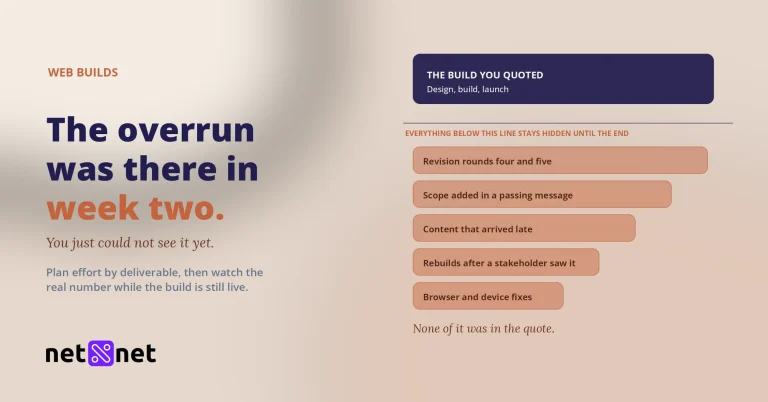
Video projects often appear to become late all at once. Usually the slip started earlier and looked harmless. The script revision took longer. The location did not get confirmed. The client needed a few more days with the storyboard. Each delay seemed survivable until the next stage inherited all of them.
Stop treating the production as one blurred timeline. Give pre-production, the shoot, and post separate Deliverables, owners, dates, and planned effort. Now the team can see whether planning is actually closed, whether the shoot is ready, and whether the edit is still inside the scope everyone agreed to.
That makes the client conversation specific. “The video is drifting” is vague. “Storyboard approval is three days late and it moves the shoot decision” gives everyone something they can act on.
Plan for the production you usually get, not the tidy one
Weak timelines start with best-case assumptions. Feedback will be immediate. Nothing will move. The first edit will be almost final. That plan looks great until it meets the first client review.
Honest effort includes the unglamorous parts. Pre-production has schedules, logistics, approvals, and coordination. The shoot has setup, resets, travel when needed, and the practical rhythm of the day. Post has assembly, exports, reviews, and the back-and-forth that appears when several people discover they have opinions about the cut.
When each stage carries real effort, the schedule gets sturdier. It may look less aggressive on paper, but it is far more usable in practice. It also makes it easier to connect the video job to broader workflow habits like tracking deliverables and effort inside a job, because the team can compare what they planned for a stage against what it actually consumed.
Post is where two revision rounds become five
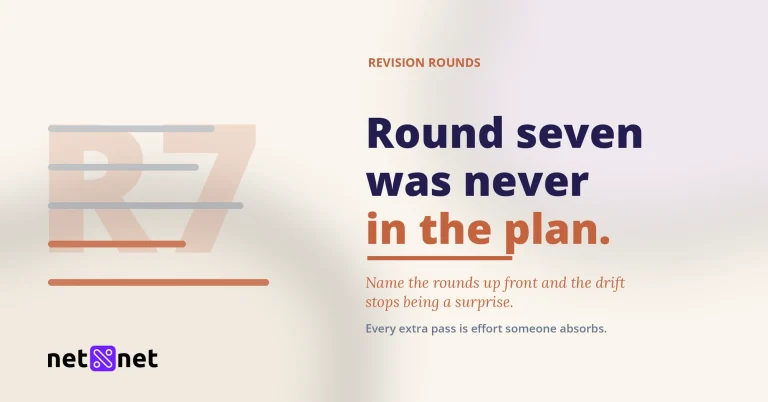
Post can expand without looking dramatic. The first cut goes out. Notes arrive from three people on three different days. A new reviewer joins late. Then a “small adjustment” changes structure instead of polish, and the edit is on pass five even though the plan stopped at two.
Define the number of rounds, what counts as one, and how the client should consolidate feedback. One complete review is a round. A slow stream of notes is still effort, and it needs to be treated like the schedule risk it is.
Tracking rounds matters because it turns vague pressure into visible scope. If the project has already used the rounds it included, the next revision is no longer invisible extra effort. It is additional work that needs a timeline decision. This is the same basic protection that matters in any delivery workflow where revision rounds can eat the timeline, but video studios feel it especially hard because post can keep expanding without any obvious natural stop.
Map the shoot dependencies before one delay travels
The shoot may be the big calendar square, but it rests on smaller things: talent, location, equipment, approvals, call sheets, travel, crew availability, and final sign-off. If those dependencies live in one producer’s head, moving one piece can squeeze the rest of the schedule before anyone sees it.
Mapping dependencies makes that chain visible. If the location confirmation slips, what does it affect? If the client cannot approve the final script on time, does the shoot still hold? If a weather move is needed, which editor bookings or delivery dates need to be touched next? The value is not in making the project rigid. The value is in seeing the knock-on effects while there is still time to replan deliberately.
Studios that skip this step often experience the same frustration: the shoot move feels manageable in the moment, but the post team later discovers that its edit window shrank, approvals got compressed, and final delivery is suddenly under strain. The problem was not only the moved date. The problem was that the connected consequences were never mapped.
Call the slip before it reaches the next stage
A stage usually signals trouble before it slips. Feedback slows down. A dependency stays open. Actual effort starts running ahead of the plan. These become surprises only when nobody is looking closely at the boundaries between stages.
Call it while the problem is still local. If pre-production is late, say so before the shoot is treated as locked. If post has used most of its effort, say so before another review round gets waved through. Early visibility creates smaller decisions. Late visibility creates compressed work and tired people.
Timeline management is less about one heroic producer holding the whole thing in their head and more about making the stages legible. With visible effort, defined rounds, and mapped dependencies, the project can change without turning opaque.
Video timelines slip when the schedule depends on tidy assumptions. They hold when each stage has its own plan and the team can see drift before it spills forward. Production will still change. At least the change will stop arriving disguised as a surprise.
FAQ
Why do video projects slip most in post-production?
Because revisions live there, and revisions have no natural ceiling unless you create one. Feedback arrives in pieces, new notes appear after the team thought the cut was done, and every round adds effort the original plan may not have included.
How do I keep revision rounds from ballooning?
Set the included rounds up front, track each one, and treat work past the limit as a timeline and scope decision. When the rounds are visible, the studio and client can see the line before they step over it.
What happens when a shoot date moves?
If your stages and their dependencies are mapped, you can see immediately what the reschedule pushes, from editor availability to delivery dates, and replan deliberately. The slip only becomes a crisis when the connections are in someone’s head instead of in the workflow.
See your work before it drifts.
Net Net keeps plan and effort side by side, so you catch the slip while there is still time to act.
Start your free trial