
How do I talk pricing with prospects without underselling the work?
Underselling starts when you quote before you understand the work. Scope the deliverables first, price from what similar work actually took, present the number with its assumptions attached, and treat pushback as a scope conversation rather than a discount trigger. Firms that hold their price are the ones that can show their work.
If you run a small creative or technical firm, pricing conversations can feel like a trap. Quote too early and you shrink the work before you understand it. The real problem usually is not confidence. It is quoting from instinct instead of evidence.
The way through is simpler than most firms make it. Get specific about deliverables. Ground the number in work you’ve done before. Show the assumptions that make the price true. When a prospect pushes back, treat it as a scope conversation.
1. Research your market and competition
You should know the market you sell into. Not because competitors should set your price, but because you need context. What kinds of engagements are common in your niche? How are firms packaging similar work? What expectations do prospects bring into the call?
That outside view keeps you from saying something wildly off base. It also helps you hear objections more clearly. Market research is only the outer boundary, though. It tells you what people around you are saying, not what the work actually takes inside your firm.
2. Determine your level of effort
This is the part too many firms rush past. Before you can price well, you need a real sense of the effort behind the work: planning, revisions, handoffs, feedback loops, and all the little turns a Job takes once it is live.
That is why similar work matters so much. Look at what comparable deliverables actually required. Where did effort expand? Where did drift show up? Which assumptions held? That history is what lets you quote without guessing.
If you do not have that visibility yet, build it. How do I estimate creative and technical projects more accurately? is the deeper version of that conversation, but the short version is simple: the firm that knows its own effort speaks about price more clearly.
3. Establish your pricing strategy
Once you understand the work, decide how you want to price it. Maybe that is a flat project fee. Maybe it is a retainer. Maybe it is a packaged offer with clear deliverables and boundaries. The model matters less than whether it matches the shape of the work.
This is where many firms undersell themselves. They pick a number first, then back into a story that makes it sound reasonable. Start with deliverables, assumptions, and expected effort. Then present the price in a way the prospect can understand.
Value still matters here. But value talk without delivery evidence is thin. The safer version is value framed by what similar work has actually taken.
4. Communicate the value of your services
A prospect should understand what they are buying, why it is structured that way, and what assumptions the number depends on. That does not mean turning the call into a lecture. It means being concrete.
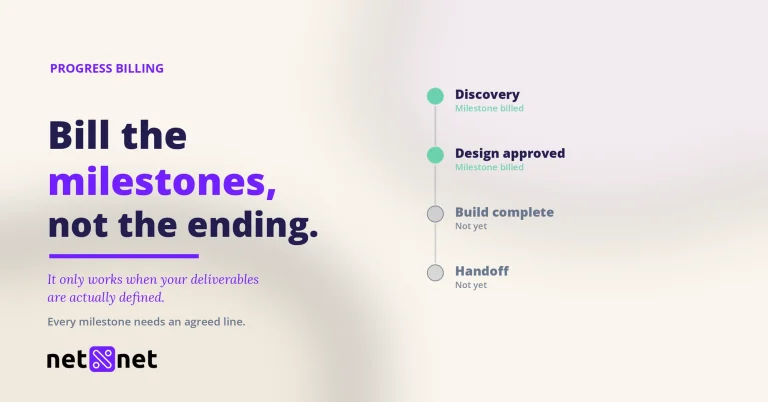
Walk them through the deliverables. Explain what is included, what review cycles the price assumes, what the timeline depends on, and what would change the scope. The goal is to make the price feel legible. Prospects push hardest when the number arrives as a black box.
5. Be open to negotiation, without turning price into a discount reflex
Most pricing pushback should lead to a scope conversation, not an immediate concession. If the budget is lower than expected, that does not automatically mean your price is wrong. It may mean the deliverables need to narrow, the sequence needs to change, or the engagement needs a smaller first step.
That is healthier than shaving the number until everyone feels uneasy. Same target, smaller phase. Same budget, tighter scope. Same scope, later timing. Those are real tradeoffs.
You can still be flexible. But flexibility works best when it sits on top of a clear quote, not instead of one.
The bottom line on talking pricing with prospects
Prospects do not need you to be slick. They need you to be clear. Research the market, know the effort behind the work, set pricing from real scope, and explain the assumptions out loud. When the conversation gets tense, stay with the work.
If you want a calmer way to do this in practice, Net Net helps small firms see Jobs, deliverables, effort, and drift in one workflow, so pricing conversations can start from evidence instead of guesswork.
FAQ
Should I give a price range on the first call?
Yes, if you label it clearly as an early range tied to incomplete scope. A range can be useful when the prospect needs to know whether you are in the same ballpark. Just make sure you state what still needs to be defined before that range becomes a real quote.
What if a prospect asks for a discount right away?
Do not rush to cut the number. Ask what they were expecting, what constraint is driving the reaction, and which parts of the work matter most. That usually reveals whether the problem is budget, timing, scope, or comparison shopping. From there, you can reshape the engagement without cheapening it.
How detailed should my pricing assumptions be?
Detailed enough that the prospect understands what the quote depends on. Spell out the deliverables, review rounds, timing assumptions, and anything that would change scope. You do not need to overwhelm them with internal process, but you do need enough clarity that both sides know what the number covers.
See your work before it drifts.
Net Net keeps plan and effort side by side, so you catch the slip while there is still time to act.
Start your free trial