
How do I present a quote so clients see the effort behind it?
Do not hand a client one big number and expect them to see the planning, client approvals, revision rounds, testing, and handoffs packed inside it. List the deliverables they will receive, show the effort behind each one, and let those pieces build the total. The price then reads like the sum of real work instead of a number pulled from thin air. Clients can move from asking, “Why is it this much?” to deciding, “Which pieces do we need?” You are less likely to have to defend the price with a discount. When the effort is visible, the price is easier to understand and feels fair.
Why a single-number quote invites pushback
A single figure gives the client your conclusion without the thinking that produced it. They know the project name and final price, but they cannot see the connection between them. That leaves them with one obvious thing to push on: “Why is it this much?”
The number itself may be fine. The problem is that nobody can see how you arrived at it. A website, campaign, identity, application, or consulting engagement can look deceptively tidy when it sits on one line. That line gives no sign of the research, planning, production, review, testing, coordination, and handoff behind it, even though every part takes effort.
Your team has probably worked through those details already. Put enough of that thinking into the quote for the client to follow. They should be able to understand the work and make a decision without doing quote archaeology on one total.
Break the quote into deliverables the client recognizes
Build the quote around what the client will receive, not your org chart. Clients recognize a research summary, a creative direction, a set of page designs, a working integration, a launch plan, or a training session. Those are useful quote lines because each one names a clear result.
Keep the internal work in the estimate, but group it under the deliverable it supports. Strategy may include research, meetings, review, and project management. A website may include testing and handoff. The client does not need every task name your team uses. The quote can stay complete without reading like an internal timesheet.
Give each deliverable a plain label and one or two sentences that define its scope. State the boundaries that matter, including the number of concepts, review rounds, page types, or systems. The client should know what they will receive and where that part of the work ends, before “just one small change” starts stretching the line.
If you need help sizing the work before you present it, start with pricing projects when the effort is uncertain.
Show the effort behind each line
Once the deliverables are clear, show the size of the work behind each one. You might use estimated effort, a range, the size of a phase, or a plain description of what the work involves. Choose the level of detail that fits how your firm quotes and gives the client enough to decide.
Then check that the effort fits the scope. A line covering strategy, production, testing, and handoff should not carry the same effort as a simple update. If it does, the quote feels off. Someone outside your field should still be able to understand why one piece is larger than another.
Let the total build from the pieces
Work out the roles and effort required for each deliverable, apply your rate structure internally, and add the lines together. That sum becomes the total.
Now you can explain where every part came from. Revisions are simpler too. If the client changes a deliverable, update the effort attached to that piece instead of nudging a mystery total until it looks right. If an assumption changes, you know which line to revisit.
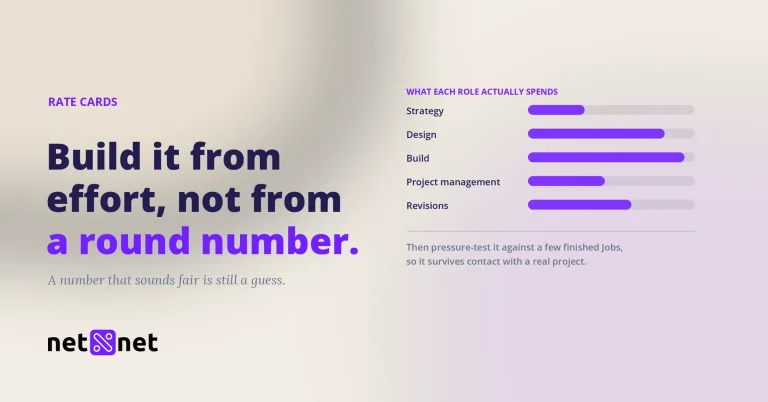
A solid internal rate card makes this much easier. How do I build a rate card that reflects real effort? explains how to connect role-based rates to completed work instead of choosing round figures.
Before you send the quote, compare the total with team capacity and the proposed timeline. Even a beautifully itemized quote can be unrealistic when the designer, developer, or strategist it requires is already spoken for on another Job. Make sure the work, effort, ownership, and timing agree.
Handle price questions by adjusting scope, not discounting
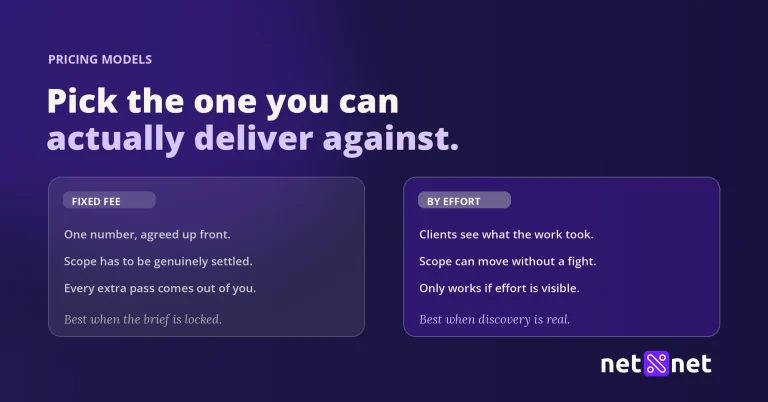
When a client says the quote is too high, resist the reflex to grab a red pen and shave the total. Ask what they need most. Because the work is visible, you can discuss choices instead of defending an unexplained figure. The first phase could include fewer deliverables. An optional feature could wait. You might reduce the number of variations or review rounds.
Every adjustment should remove real effort from the Job. Lowering the price while keeping the same commitment leaves your team with an estimate they cannot realistically deliver. It also teaches the client that the original number can move even when the work does not.
You can also stage the engagement. Keep the essential work in the first phase. Move lower-priority work into a later phase and quote it when the client is ready. That protects the work that remains and keeps the team’s commitment clear.
Clients usually understand scope choices more easily than unexplained discounts. They can see what they are keeping, what they are postponing, and how each choice changes the effort.
Keep the quote tied to what you will actually deliver
Use the quote as the starting point for delivery. Carry the same deliverable names into the Job plan, assign the expected effort, and track progress against those commitments. Do not make the delivery team translate the quote into a whole new language. If the quote promises a research summary and two creative directions, those exact items should appear in the plan.
That continuity helps when the Job changes. When the client asks for “just one small change,” the team can compare the request with the agreed work and decide whether it belongs inside an existing deliverable or needs a scope decision. The client can also see how progress maps to the structure they approved.
Once the Job is done, compare the quoted effort with what delivery actually took. Look for coordination you forgot to include, review rounds that kept multiplying, or deliverables that were defined too broadly. Carry those lessons into the next quote.
FAQ
Should I show clients my hourly rates or hours?
You do not need to hand over your internal rate card. The client needs enough information about the effort behind each deliverable to make the price understandable, even if that is only a general sense of the work involved. Most firms show the deliverables and the effort each represents while keeping line-by-line rates internal. The client sees the shape of the work without turning the firm’s costs into the negotiation.
What if the client says the quote is too high?
Make it a scope conversation instead of a discount conversation. Because the price comes from visible deliverables and effort, you can ask which pieces are essential and which can wait. Then adjust the work itself rather than quietly lowering the number while taking on the same effort for less.
Does an itemized quote just invite clients to cut lines?
Sometimes, and that is not automatically bad. When a client removes a deliverable, its effort goes with it, so the number stays honest. A single lump sum hides which work is driving the price. Then every objection becomes a judgment on the whole quote instead of a decision about scope.
See your work before it drifts.
Net Net keeps plan and effort side by side, so you catch the slip while there is still time to act.
Start your free trial