
Should you charge for discovery and scoping work?
Yes, charge for discovery. It takes real effort and gives the client something useful: a clearer scope, an effort estimate, and a plan they can act on whether or not they hire you for the larger Job. Free scoping usually gets rushed to limit the unpaid work or quietly expands because the team wants to be helpful. Both paths produce shaky estimates. Treat discovery as a small paid phase with its own deliverable and boundaries. The client gets better thinking. Your team gets room to do the thinking without pretending it happened during a cheerful sales call.
Why discovery is real work, not a free sales step
Sales answers whether the client and firm should work together. Discovery answers what the work actually is. Those are different Jobs, even when they happen close together.
Discovery may involve goals, users, content, technical conditions, stakeholders, constraints, interviews, system reviews, and dependency checks. Your team turns that information into decisions that shape the scope and estimate. That is delivery work, not a little bonus activity hiding behind the proposal.
When discovery is free, it tends to become rushed or invisible. The rushed version skips questions and leaves the main Job exposed. The invisible version consumes capacity nobody planned. Neither gives the client a dependable starting point.
Draw the line early. A sales conversation can cover fit, timing, broad needs, and whether a paid discovery phase makes sense. Detailed investigation and solution planning begin once the client approves that phase.
What clients actually get from a paid discovery phase
Discovery needs a deliverable. The client should leave with something useful even if they stop there: a scope document, requirements summary, audit, recommended approach, work breakdown, effort range, timeline, risks, or next-step plan.
State which questions the phase will answer. Who must the Job serve? What systems connect? What content exists? Who approves? Which unknowns could move the estimate? What belongs in the first release, and what can wait?
The output should turn uncertainty into decisions. A folder of notes is not a discovery deliverable. It is evidence that a meeting occurred.
This distinction makes the value easier to explain. The client is not paying for permission to receive a proposal. They are paying for structured analysis and a usable definition of the Job. The proposal is one result of that work.
Price it as its own phase with a clear deliverable
Estimate discovery like any other work. List the people involved, tasks, client participation, review point, and final deliverable. Then size the effort from those pieces instead of choosing a neat number and hoping the questions cooperate.
Keep the phase bounded. State the included interviews, workshops, systems, documents, and review rounds. If an audit may expand based on what you find, use a range and set the point where you will confirm the remaining effort.
Give discovery its own agreement or a clearly separated line in the proposal. Include a start, a completion condition, and a decision point. Approving discovery should not quietly authorize a much larger Job the client has not seen yet.
For a highly uncertain engagement, use the approach in How do I price a project when I can’t predict the effort?. A tightly defined first phase replaces some of the guesswork before either side makes the larger commitment.
How paid discovery improves the main estimate
The main estimate gets stronger because important unknowns have been examined. The team can name the deliverables, dependencies, people, approval path, and a realistic sequence before committing capacity.
Discovery also exposes what broad requests hide. “Build a new website” may include content strategy, migration, page types, accessibility review, integrations, analytics, testing, training, and launch support. That is quite a crowd to fit inside one line.
Use the discovery output to build the quote. Show the deliverables, assumptions, effort, timeline, and decisions that came from the phase. How do I present a quote so clients see the effort behind it? explains how to make that work legible instead of dropping one lonely number at the bottom.
Handle clients who expect scoping for free
Explain the boundary without making a speech. You are happy to discuss goals and assess fit before an engagement. Detailed requirements, solution design, effort planning, and a usable scope belong to paid discovery.
Describe the deliverable and how it improves the next decision. Once clients can see what discovery produces, it stops looking like a fee attached to a sales call.
If someone wants a free proposal, offer a broad direction and range based on the limited information. Label the assumptions. Do not complete the full investigation while calling it estimating. That gives away the thinking and still leaves your firm responsible for unknowns it was never allowed to resolve.
Roll discovery into the project when it makes sense
Discovery can be the first paid phase of a larger engagement. The client approves it, receives the findings, and then decides whether to authorize the remaining work. The relationship keeps moving without pretending later phases are already known.
You may credit or bundle the discovery price into the larger agreement if that fits your structure. Keep the effort visible either way. The team performed the work, and the main scope depends on it.
Define the transition before discovery begins. State what gets delivered, when the main estimate appears, who decides, and whether the client may take the discovery output to another provider.
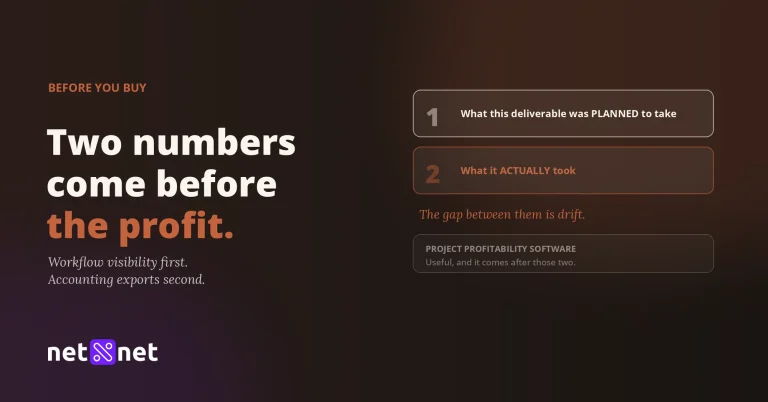
Afterward, compare planned and actual discovery effort. Did interviews run longer? Did the audit go deeper? Did one stakeholder reveal an approval committee nobody mentioned? Carry those lessons into the next discovery estimate.
Paid discovery works when both sides get a fair exchange. The client receives a plan they can use. Your team gets room to investigate properly. The main Job begins with fewer hidden questions and a much more honest commitment.
FAQ
Won’t charging for discovery scare off potential clients?
It may filter some prospects, and that can be useful. A client who will not commit to a small, defined planning phase may also resist the effort required to scope the larger Job properly. Explain the deliverable clearly so they can judge discovery on its own value.
How much of the project should discovery be?
Size it to the actual effort required to understand the work and produce a usable plan. For many Jobs it is a small, self-contained phase. The right amount depends on the unknowns, participants, and deliverable, not a fixed percentage.
What if the client wants to skip discovery and just start?
You can price the larger Job with a wider range and an early checkpoint that reflects the unresolved unknowns. Skipping discovery does not remove that effort. It moves the questions into delivery, where they are usually more disruptive.
See your work before it drifts.
Net Net keeps plan and effort side by side, so you catch the slip while there is still time to act.
Start your free trial