
How do I track my team’s time at work effectively?
Effective effort tracking is consistent, low-friction, and tied to real work, not a surveillance tool. Make logging take seconds, tie every entry to a Job and Task, and use what you learn to plan and price, not to police individuals. Teams cooperate when the purpose is clear and the process respects their day.
Time tracking works when it is boring in the right way. Consistent, easy to do, clearly connected to something the team actually cares about. It fails when it feels like a webcam over the shoulder, a guessing game at the end of the week, or one more admin chore the team quietly resents.
Beneath the old hype, the basics still hold up. Tracking effort matters because it improves planning, shows where the work is really going, and gives you an operating record you can actually learn from. The practical version most owners already know: if you do not log the work, you lose the chance to learn from it later.
Why logging effort matters
The first thing worth saying plainly is that unlogged work disappears.
When a team does not record effort consistently, owners end up planning from memory. They guess how long a certain kind of Job usually takes. They underestimate the time that vanishes into one-off requests, revisions, meetings, and the quiet cleanup after the fact. Then the next schedule gets built on shaky memory instead of a real record, and the cycle keeps repeating.
Logging effort changes that. It shows where work is actually going and where the week keeps getting eaten alive.
Better logging improves planning and focus
Project planning, accountability, and productivity are the usual bullet points. The plain version is simpler: good effort data lets the team make better calls.
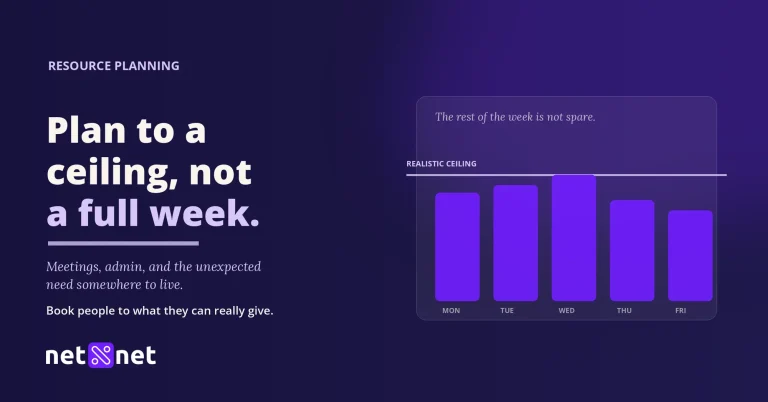
If you know what a certain kind of work really takes, timelines get more realistic. If you can see where effort keeps clustering on the same person, you can rebalance work earlier. If small tasks are quietly eating the week, that becomes something you can point at instead of a vague feeling on a Friday afternoon.
It helps individuals too. The day gets tied to specific tasks and Jobs instead of a foggy sense of having been busy since coffee.
Low-friction tracking is the difference between theory and adoption
This is where most time-tracking rollouts win or lose.
If logging takes too long, the team will put it off until Friday and then guess. If the categories are vague, the entries will get sloppy. If people have to remember hours later what they were doing at eleven, the record drifts away from reality inside a week.
That is why low-friction tracking matters so much. Logging should take seconds. The work should already have enough structure that the person logging does not have to invent context every time. The easier the motion, the more likely the record stays current, and current is the whole point.
Use the data to plan and price, not to police
This is the part that matters most.
Time tracking should support planning, staffing, estimating, and pricing decisions. It should help the firm understand effort patterns and improve future Jobs. It should not turn into a personality scoreboard or an excuse to hover over every minute of a person’s day.
Teams cooperate a lot more readily when the purpose is clear. If they understand that logging builds better plans and protects saner workloads, the process feels like it is on their side. If it feels like surveillance, adoption quietly falls apart no matter what the memo said.
Respect the team while keeping the record honest
Privacy, trust, and involving the team early are the pieces most owners get wrong first. They still matter.
People do better with time tracking when they understand why it exists and when the process fits the way work actually happens. That means explaining the purpose out loud, keeping the system light, and making corrections easy for the days that do not go the way anyone planned.
Trust does not mean having no record. It means building a record that respects how real work unfolds, including the afternoon a developer is waiting on copy that never comes.
One calm product connection
In workflow management software like Net Net, the helpful part is that effort stays tied to the actual Job and Task instead of being logged into a disconnected spreadsheet on Friday. That keeps the data useful for planning without turning time tracking into a separate performance ritual.
The bottom line
Effective team time tracking is consistent, low-friction, and tied to real work. It helps owners plan better, price more honestly, and see where effort is really going. It should never feel like surveillance.
Make logging quick. Tie every entry to the work itself. Review the data to improve the next Job, not to police the people doing this one. When the purpose is clear and the process respects the team, effort tracking is much easier to make stick.
FAQ
How do I get my team to actually track time?
Make the process easy and say the purpose out loud. People are much more likely to log effort when it takes only a moment and when they know the data will be used to improve planning, workload balance, and future estimates, not to build a file about them personally. The framing matters as much as the tool.
How often should time be logged?
As close to the work as possible without creating friction. Real-time logging works when it fits the person and the task. Manual entry later the same day is fine too. The important thing is that the record stays current enough to remain accurate, because Friday-afternoon reconstruction is where the data starts lying to you.
What do I do with the data once it’s collected?
Use it to compare the plan against reality, sharpen future estimates, spot the recurring sources of Drift, and understand where the week actually goes. If the data only gets collected and never reviewed, the tracking habit will eventually feel pointless to everyone doing it, and adoption will quietly evaporate.
What makes a time-tracking system fail?
Usually one of two things. It is too heavy to keep up with, or it is used as a policing tool instead of an operating tool. Good tracking has to be light enough to maintain and useful enough that the team can plainly see why it matters.
See your work before it drifts.
Net Net keeps plan and effort side by side, so you catch the slip while there is still time to act.
Start your free trial