
What’s the difference between cost variance and schedule variance?
Cost variance is effort: you planned a deliverable at one level of effort and it took more. Schedule variance is time: it took longer on the calendar than planned. A Job can blow one without the other, and small firms need to watch both, because effort overruns eat margin while schedule overruns tie up capacity.
Variance analysis sounds heavier than it needs to be. The underlying idea is simple: compare what you planned with what actually happened, then pay attention to the gap.
That gap breaks into two kinds. One is about effort. The other is about timeline. Small firms need both, because they tell you different things about the same Job.
Cost variance is the effort gap
Cost variance is the difference between what you expected a project to cost and what it actually cost. For a small firm, the cleaner everyday way to think about that is planned effort versus actual effort.
You expected a deliverable to take one amount of effort. It took more, or less. That difference is the first signal.
This matters because a Job can look calm on the calendar while quietly burning more effort than expected. If you only ask whether the deadline held, you can miss the fact that the work was harder than planned the whole way through.
Schedule variance is the timeline gap
Schedule variance is different. It measures whether the Job finished when you expected it to finish.
This is the calendar side of the picture. A project can stay close to planned effort and still drift on the timeline because of approvals, waiting, handoffs, blocked dependencies, or stop-start momentum. The work itself may not be heavier, but the calendar still slips.
That is why it is worth keeping the two ideas separate. They are connected, but they are not the same thing.
A Job can miss one without missing the other
This is the part owners often need to see more clearly.
Imagine a deliverable that took much more effort than planned, but the team still got it out on time because people absorbed the overrun, worked around it, or shifted other work to protect the date. That is an effort problem even if the schedule looks fine.
Now flip it. Imagine a deliverable that stayed close to planned effort, but the client took too long on approvals and the calendar dragged. That is a timeline problem even if the effort stayed near plan.
Watching only one of those signals leaves you half blind.
Map it to the two variables that matter
For small firms, the clearest operating lens is this: effort and timeline.
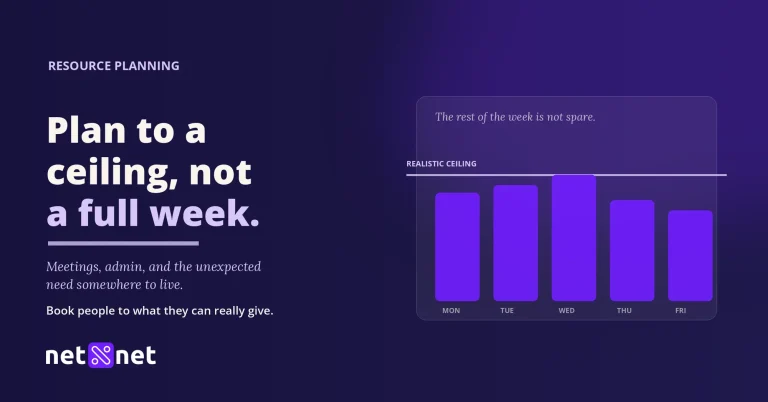
Effort tells you how heavy the work actually was compared with the plan. Timeline tells you how long the work occupied space on the calendar compared with the plan.
Those are different variables, and they answer different questions. If effort is off, your estimating or scope control may need work. If timeline is off, your sequencing, approval flow, or dependency handling may need work. Sometimes both are wrong. Sometimes only one is.
When to measure variance
Look at variance both during the project and after it ends. Both views are worth keeping.
If you only look at the gap after everything is over, you get hindsight but not much steering power. If you look during the Job, you have a chance to intervene while the work is still recoverable. Then, at the end, you can review what the full pattern taught you.
That is also what makes a debrief more useful. You are not just asking whether the Job felt hard. You are looking at where effort ran hot, where the timeline slipped, and what that means for the next plan.
Keeping both signals visible
A lot of small firms avoid this kind of tracking because they assume it needs heavy project accounting. It does not. You mainly need a consistent way to compare planned effort, actual effort, and planned timeline against actual progress.
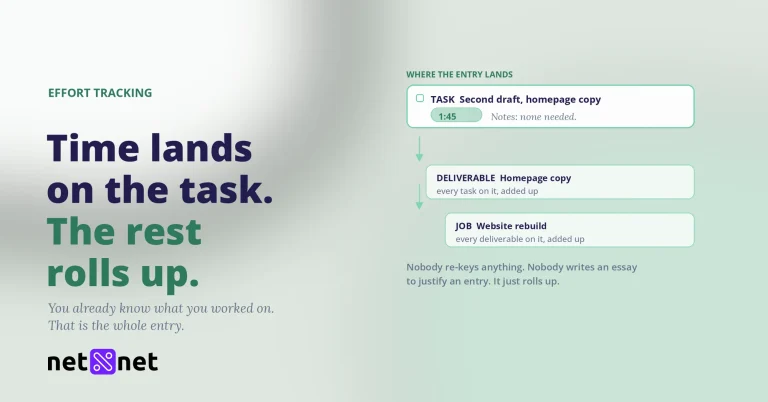
In workflow management software like Net Net, those signals can stay close to the Job instead of living in a separate spreadsheet ritual. That makes it easier to catch drift before it turns into a postmortem.
The bottom line
Cost variance and schedule variance matter because they describe two different kinds of miss. One says the work took a different level of effort than expected. The other says the work occupied a different amount of calendar time than expected.
A Job can miss one and not the other. That is exactly why small firms should watch both. If you can tell whether the problem is effort, timeline, or both, you can fix the right thing instead of guessing.
FAQ
Can a project be on schedule but over budget?
Yes. That usually means the team protected the date but spent more effort than planned to do it. In a small firm, that can happen when people absorb extra revision work, unexpected complexity, or avoidable cleanup while still pushing to hit the promised delivery date.
Which matters more, cost or schedule variance?
Neither always matters more. They answer different questions. If effort is off, your planning or scope control may be weak. If timeline is off, your approvals, sequencing, or dependency handling may be the issue. You need both signals to understand what actually went wrong.
How do I track both without heavy tools?
Keep it simple. Start with planned effort, actual effort, planned timeline, and actual finish or current position. If those are reviewed consistently at the deliverable or Job level, you can usually spot the real gap without building a complicated reporting system around it.
What is the first warning sign that variance is starting to grow?
Usually it is not a single dramatic miss. It is a pattern: a deliverable is taking more effort than expected, or a waiting period keeps stretching while the work sits blocked. Small weekly reviews help you catch that pattern before it becomes a bigger operational problem.
See your work before it drifts.
Net Net keeps plan and effort side by side, so you catch the slip while there is still time to act.
Start your free trial