
How do you re-estimate a project mid-flight without redoing the quote?
Partway through a Job, the estimate stops matching the work. Discovery took more effort than it was given, the build is starting later than planned, and the people on the build are already wondering whether their phase was estimated on the same assumptions. The quote is signed. The date is on the client’s calendar. And you now know something about this Job that the quote doesn’t.
There are three things to do at that point, in order.
- Work out why the estimate is wrong. A bad guess, a scope that moved, and work nobody could have known about each call for a different conversation.
- Re-estimate the phases that haven’t happened yet, using what the finished phases just taught you, and leave the rest of the quote alone.
- Tell the client, with a proposal, while there’s still enough Job left for the proposal to matter.
Most firms do none of that for a while. They notice the gap, and then everyone quietly hopes the back half makes it up. It almost never does, and the hoping turns out to be the expensive part, far more than the estimate itself.
Why the waiting feels so reasonable
Nobody sits on a bad estimate out of cowardice. They sit on it because of a chain of thought that sounds sensible at every link.
The first phase ran long because of onboarding, and onboarding only happens once. The next phase is the one we’re actually good at, so it’ll go quicker. The client has been slow with feedback, so some of this isn’t even ours. And the work still ahead always looks tidier than the work behind you, because you haven’t hit its specifics yet.
Each of those can be true and the Job still lands long. They’re reasons, not corrections. What makes the moment so easy to ignore is that nothing has broken. The team is working, the client is happy, the deadline is still in the future. The Job has drifted, and Drift is the kind of trouble that doesn’t announce itself. A gap opens between the plan and what’s really happening, it widens a little every day, and everybody involved behaves reasonably the whole time.
If you’re waiting for the moment it becomes obvious, you’re waiting for the moment it becomes expensive. Those are the same moment.
Early is cheaper because you still have levers
Said early, a wrong estimate is a variance on a Job that can still move. You can resequence the remaining phases. You can trade a nice-to-have for the thing the client actually cares about. You can pull in a different person, or move a date while there’s still calendar to move it into. All of that is a conversation about the plan, and clients have those conversations all the time without anyone losing sleep.
Said late, the same facts become a shortfall against a date, and the only lever left is the client’s patience. A surprise at that point also tells them something about how their work is being handled: either you didn’t know, or you knew and didn’t say. Neither is a comfortable thing for a client to sit with, and they’ll carry it into the next proposal whether or not they mention it.
Sort out why before you pick up the phone
Firms skip this step more than any other, and it’s the one that decides how the conversation goes.
There are three reasons an estimate comes up short, and they want different answers.
- You estimated it badly. The work is exactly what you thought it was, and you were wrong about what it takes. This one’s yours. Own it cleanly, fix the estimate for next time, and decide how much of the gap you absorb as the cost of learning something true about your own shop.
- The scope moved. What you’re building now isn’t quite what you quoted, usually through a run of small, reasonable additions that nobody logged. That’s a change order, and change orders are a normal part of the work. The only reason it feels like a confrontation is that you’re raising it late, with a pile of small changes that each looked free at the time.
- The work was genuinely unknown. Nobody had done this before, including you, and the estimate was a best guess on purpose. An honest conversation about that usually lands fine, because the client knew it was new too.
Most mid-Job overruns are a mix, which is why you have to pull them apart before you call. A client will accept “the scope grew, and here’s the change order.” They’ll accept “we got this wrong, and here’s what we’re doing about it.” What they won’t accept is one number with no story behind it, because that sounds like the beginning of a pattern.
Re-estimate what’s left, not the whole quote
Re-estimating doesn’t mean tearing up the proposal. The finished phases are finished. Their estimates were wrong, and that’s now a fact about the past. The phases still ahead are the only ones you can do anything about.
Take those and estimate them again using what the completed phases taught you, not what you believed before the Job started. The cause you just sorted out is the input here. If discovery ran long because the client’s content was messier than anyone knew, the build phase isn’t going to be pristine either, and the copy the developer is waiting on will arrive late and need more passes than planned. That’s information. It was expensive to get, so use it. If discovery ran long because the client added two audiences along the way, the build estimate changes for a different reason, and a change order comes with it.
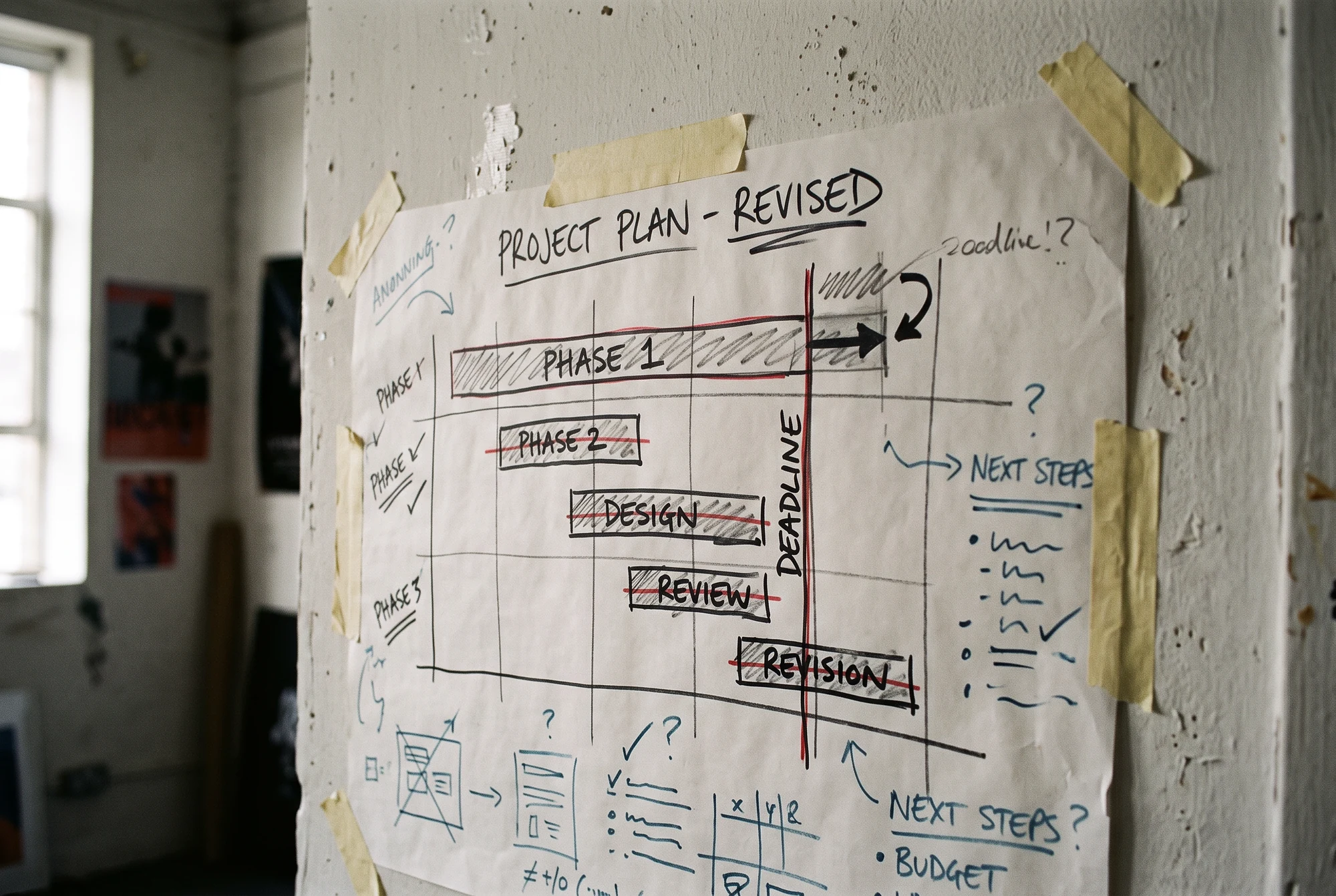
Then put the revised plan beside the original, so the gap is a thing you can look at together rather than a feeling you’re trying to describe. That comparison is the conversation. “Here’s where we are against the plan, and here’s what we propose” is a much easier sentence to say than “we’re behind.”
This is also where disconnected tools do real damage. If the plan lives in one place, the effort in another, and the client thread in a third, assembling that comparison is enough of a chore that you put it off, and putting it off is how an early conversation turns into a late one for purely logistical reasons.
How to say it
Keep it short, lead with the plan, and bring a proposal rather than a problem.
Something like: “The discovery phase took more than we scoped, and here’s why. If nothing else changes, that puts us past the launch date. Two options: we move the launch, or we drop the secondary templates from this phase and pick them up in the next one. I’d recommend the second. Which works for you?”
No apology spiral, no hedging, no burying it in the fourth paragraph of a status update. You’re handing them a decision they’re able to make, at a point where making it still helps.
Clients mind variance less than firms expect. What they mind is finding out late.

Making the next one better
The reason this keeps catching people is that most firms don’t have a plan they can watch the work move against. The estimate goes into a proposal, the proposal gets signed, and the estimate isn’t looked at again until the Job is over and somebody adds it up.
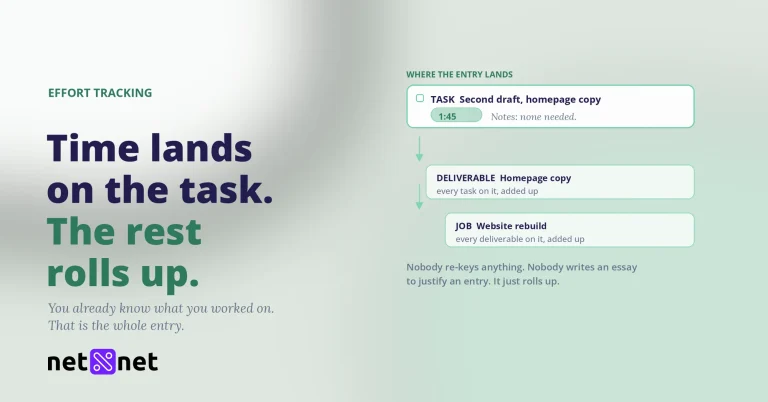
Put the estimate where the work is and track effort against it as the Job runs. A wrong estimate then stops being something you discover and becomes something you notice, which is a far cheaper way to find out. Marc, who founded Net Net, hit a big shortfall on the first project of a productized website program at his own agency, Right Here Interactive. He spent the next two projects tightening the assumptions against what each phase actually took, then repriced, and the program has landed consistently since. The record of what the last Deliverable took is the whole basis of the next estimate, and you only get that record by keeping it while the work is running.
Pick the Job you’ve got going right now that you’re a little worried about. Put the remaining phases next to what the finished ones took, sort out why they differ, and have the conversation this week rather than the week the date arrives.
FAQ
Should I tell a client the estimate was wrong?
Yes, and as early as the evidence is clear. Said early, it’s a variance on a plan the client can still help adjust. Said late, it’s a surprise against a date, and the client is left wondering whether you didn’t know or didn’t say.
When is the right time to re-estimate?
The first time a phase runs meaningfully past its planned effort and you can say why. Waiting for certainty usually means waiting until the options are gone.
Do I have to absorb the overage?
Not automatically. Separate the causes first. A bad estimate is yours to absorb. Scope that moved is a change order. Work that was genuinely unknown is an honest conversation, and most clients will have it with you.
Do I need to redo the whole quote?
No. The finished phases are finished. Re-estimate only the phases still ahead, using what the completed ones taught you about this client and this work.
How do I stop this happening on the next Job?
Keep the estimate where the work is, track effort against it as the Job runs, and reuse what each Deliverable actually took when you quote the next one.
See your work before it drifts.
Net Net keeps plan and effort side by side, so you catch the slip while there is still time to act.
Start your free trial